
What Are the Early Signs You May Need a Dental Implant?
Have you noticed how a missing tooth can affect more than just your smile?
Chewing may become less balanced, nearby teeth can shift, and supporting bone begins to remodel. For patients considering dental implants in Seattle, WA, the key question is whether the site, surrounding tissues, and overall health support treatment. An examination can compare suitable replacement options before you decide on treatment.
When Tooth Loss May Point Toward Dental Implant Treatment
Tooth loss, a severely damaged tooth that cannot be restored reliably, or reduced chewing function can prompt a discussion of replacement.
These changes do not automatically require an implant. A bridge, removable partial denture, or another approach may be appropriate depending on neighboring teeth, the bite, and the patient’s goals.
Signs You May Need a Long-Term Tooth Replacement
A permanent gap may need attention when you notice signs such as:
- Difficulty chewing comfortably on one side
- Food collecting around the open space
- Nearby teeth beginning to shift or tilt
- Changes in your bite
- Trouble keeping the area clean
An implant dentist in Seattle, WA can examine the missing-tooth area and explain whether an implant, bridge, or removable restoration may be appropriate. The recommendation depends on bone support, surrounding teeth, bite function, and long-term maintenance needs.
How Missing Teeth Affect Bone, Bite, and Chewing Function
Natural tooth roots transfer forces into the jaw during chewing. After a tooth is lost, the surrounding bone no longer receives the same stimulation and gradually remodels. The degree of change depends on anatomy, time since tooth loss, infection history, and individual healing.
An untreated gap may also alter the bite. Adjacent teeth can tip or drift, while the opposing tooth may move farther into the space. An examination can determine whether these changes are affecting tooth position or chewing.
When a Dental Implant May Be Recommended
An implant may be an option when a missing-tooth site has enough healthy bone and gum support for placement.
Signs and factors that may affect whether a dental implant is appropriate include:
- Enough healthy jawbone to support the implant
- Healthy gum tissue around the treatment area
- No active oral infection
- Medical conditions that may affect healing
- Tobacco use, which can interfere with recovery
- Medications that may influence bone healing or implant planning
Because implant placement is a surgical procedure, the dentist also reviews possible risks such as infection, injury to nearby structures, nerve-related symptoms, and sinus complications in some upper-jaw cases.
What Dentists Evaluate Before Implant Placement
During planning, a dentist in Seattle, WA, examines the proposed implant site, gums, bite, and nearby teeth. Dental X-rays and, when indicated, three-dimensional imaging can show bone dimensions and important structures such as nerves or sinus spaces.
The dentist considers medications, tobacco use, periodontal history, and conditions that could affect healing. When bone volume is inadequate, grafting may be discussed. Manage active oral disease before elective implant placement.
What to Expect During the Dental Implant Process
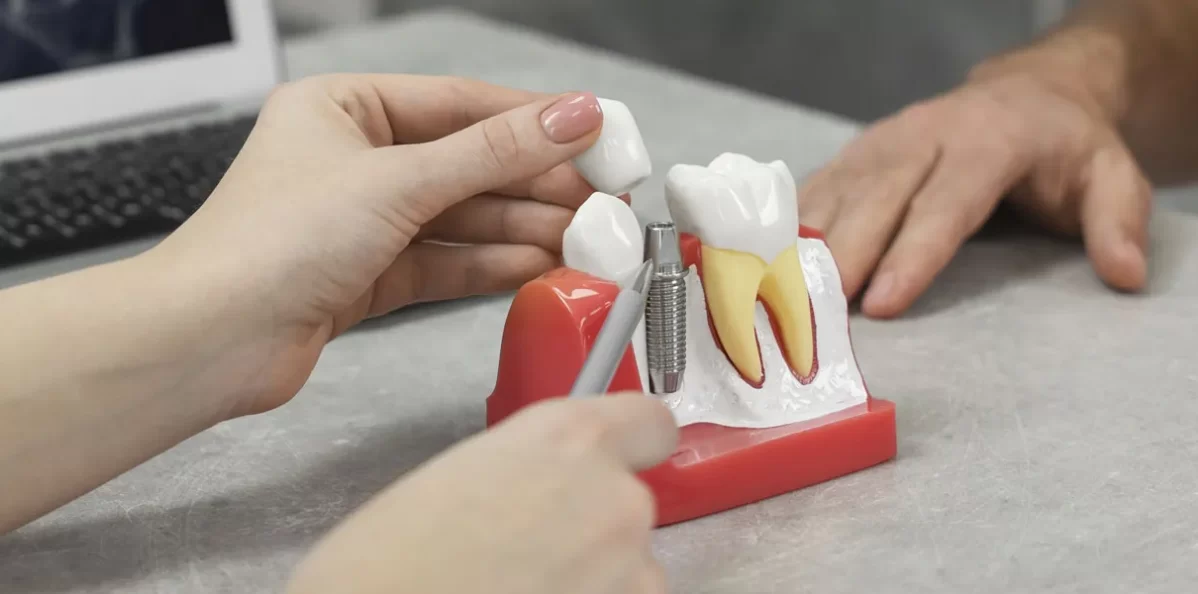
Treatment is often completed in stages. A nonrestorable tooth may first need extraction. The implant is then positioned in the jaw, where healing allows bone to form a stable connection with its surface. This is called osseointegration.
After healing, the restorative phase may include an abutment and custom crown. Some patients need bone grafting or periodontal treatment first. The process can extend over several months because tissue healing determines when the next stage is appropriate.
Why Early Evaluation Can Matter After Tooth Loss
An early dental visit does not commit a patient to implant surgery. It provides an opportunity to examine the site, identify infection or tissue concerns, and note changes in bone, bite, and neighboring teeth.
As an open space remains untreated, surrounding bone and tooth position may change over time.
Exploring Dental Implant Options in Seattle
When comparing dental implants near me, convenience matters, but it should not be the only consideration. Patients can ask how the site is assessed, what imaging is used when needed, how gum health is managed, and how the final restoration is planned.
Implant care should fit the entire mouth, not just the space. Hygiene access, bite forces, neighboring teeth, periodontal health, and maintenance matter. A careful diagnosis helps determine whether implant treatment is a reasonable option.
Conclusion
Early reasons to discuss tooth replacement include reduced chewing comfort, changes around a missing-tooth space, or a tooth that cannot be restored predictably. Implant candidacy still depends on examination findings and individual health factors. At 3rd & Columbia Dental, patients can discuss these findings with a dental team that provides implant care and can explain appropriate next steps.
Frequently Asked Questions
No. Candidacy depends on available bone, gum health, nearby anatomy, medical history, and restorative space. Clinical and radiographic assessment is needed before recommending treatment.
It is reasonable to discuss replacement after the area has been assessed and urgent problems are controlled. Timing depends on healing, infection, bone condition, and whether grafting is needed.
Not everyone needs grafting. It may be recommended when the existing jawbone cannot provide adequate support. Imaging and examination help determine whether augmentation is necessary.
Local anesthesia is commonly used during placement. Temporary soreness, swelling, bruising, or minor bleeding can occur afterward. Patients should review postoperative expectations with the treating dentist.
Treatment length depends on bone healing, grafting needs, implant stability, and restorative planning. Some cases progress sooner, while others require several months before the final restoration.
Clinical References
Mayo Clinic, Dental Implant Surgery.
American Dental Association MouthHealthy, Implants.